

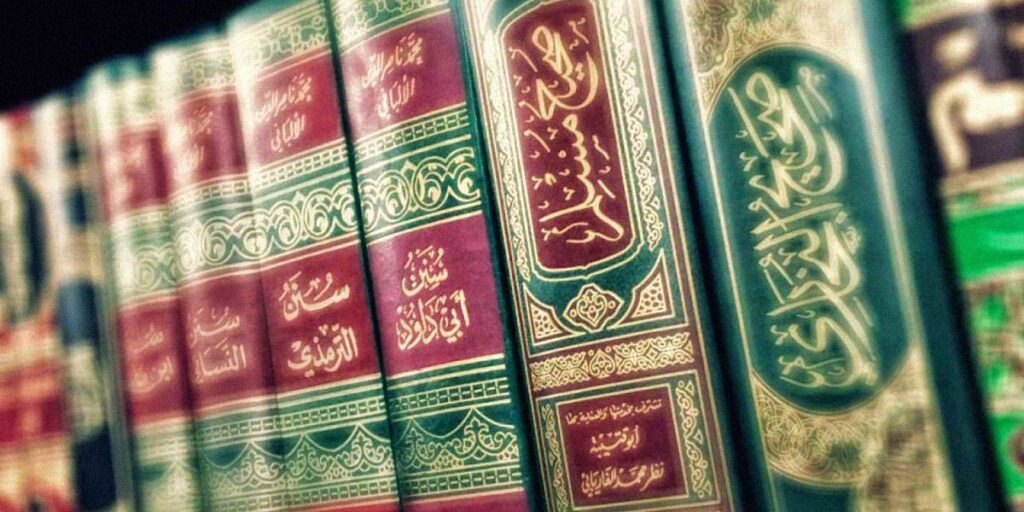
Understanding Hadith | The Ultimate Beginner’s Guide
Explore our beginner’s guide to understanding Hadith: its significance, types, and practical tips for new Muslims. Understand the essence of Islamic teachings.
Are you new to Islam and wondering how to navigate the vast ocean of its teachings? Have you heard about Hadith but find yourself confused about its role and significance? Understanding Hadith is crucial for grasping the full depth of Islamic teachings, as it complements and elaborates on the Quran’s guidance.
This guide is designed to demystify Hadith for beginners, offering a clear, accessible introduction to its essence and importance. Whether you’re a new Muslim seeking clarity or someone eager to deepen your knowledge, this comprehensive overview will illuminate the foundational role of Hadith in Islamic life and practice.
This blog will provide a clear and approachable introduction to Hadith, addressing its significance, historical context, and practical implications. Whether you’re a newcomer or seeking to deepen your knowledge, this guide will help you navigate the foundational aspects of Hadith with confidence and clarity.
What is Hadith?
Hadith consists of the sayings, actions, and approvals of the Prophet Muhammad (peace be upon him) as recorded by his companions. It is a crucial source of guidance for Muslims, complementing the Quran by providing detailed explanations and practical examples of Islamic principles.
While the Quran outlines the core teachings of Islam, Hadith offers insights into the Prophet’s interpretation and application of these teachings in various aspects of life, including religious practices, ethics, and daily interactions.
Historical Background: How Hadith Was Collected and Preserved
The preservation of Hadith began during the Prophet’s lifetime, with his companions memorizing and recording his words and actions. After his passing, the collection process became more formalized. Scholars meticulously compiled Hadith from oral reports into written collections.
They employed rigorous criteria to assess the authenticity of each Hadith, including evaluating the integrity and reliability of the narrators (known as Isnad) and the consistency and accuracy of the content (known as Matn). This thorough scrutiny ensured that only genuine teachings were preserved and transmitted.
Types of Hadith:
Hadiths are categorized based on their authenticity and reliability:
- Sahih (Authentic): These Hadiths are considered the most reliable. They have a solid chain of trustworthy narrators and consistent content, reflecting the true teachings of the Prophet.
- Hasan (Good): While also reliable, Hasan Hadiths are slightly weaker than Sahih due to minor issues in the chain or the narrators’ credibility. They are still accepted and used in Islamic practice.
- Daif (Weak): These Hadiths are considered less reliable due to deficiencies in their chain of narrators or inconsistencies in the content. They are generally not used for establishing legal or theological rulings but may be referenced in certain contexts.
Understanding these categories helps Muslims discern the strength and applicability of Hadith in guiding their beliefs and practices.
The Importance of Hadith in Islamic Teachings
Hadith is essential for a full understanding of the Quran, as they are intricately linked. The Quran provides the divine message, while Hadith offers the Prophet Muhammad’s (peace be upon him) explanations and illustrations of that message. As stated in the Quran:
- “And We have revealed unto thee the Remembrance that thou mayst explain to mankind that which hath been revealed for them, and that haply they may reflect.” (An-Nahl 16:44)
- “And We have revealed the Scripture unto thee only that thou mayst explain unto them that wherein they differ, and (as) a guidance and a mercy for a people who believe.” (An-Nahl 16:64)
These verses underscore that the Prophet’s role extends beyond delivering the message to actively explaining and clarifying it. Without Hadith, many aspects of the Quran remain abstract, lacking practical application.
Legal and Ethical Guidance
Hadith plays a critical role in shaping Islamic law (Sharia) and ethical behavior by providing detailed guidance on implementing Quranic principles. For example:
- Worship Practices: Hadith provides specific instructions on how to perform prayers, fasts, and pilgrimage, turning abstract commands from the Quran into actionable practices.
- Legal Rulings: Hadith addresses various legal issues, such as marriage, business transactions, and criminal justice, offering clear examples of how to apply Quranic laws in real-life situations.
Examples of Hadith Impact
Hadith has profoundly influenced Islamic practices and societal norms.
- Prayer and Rituals: Hadith explains the precise methods of performing Salah (prayers), observing Ramadan, and conducting Hajj, which are fundamental practices in Islam.
- Charitable Acts: The Prophet’s Hadith about charity has inspired the establishment of numerous charitable organizations and initiatives aimed at helping those in need.
- Social Conduct: Hadiths that emphasize kindness, respect, and ethical behavior have shaped Islamic social norms and personal conduct, reinforcing the values and morals that the Quran advocates.
Understanding Hadith is essential for fully comprehending the Quranic teachings and correctly applying them in daily life. They provide a comprehensive framework for implementing and embodying Islam’s principles, ensuring that Muslims follow divine guidance.
Understanding the Classification of Hadith
Hadith plays a crucial role in Islamic tradition, serving as a source of guidance alongside the Qur’an. To preserve the authenticity of these narrations, scholars developed a complex science known as ʿIlm al-Ḥadīth (Hadith Sciences). This system classifies and evaluates Hadith to ensure they accurately reflect the sayings, actions, and approvals of the Prophet Muhammad (PBUH). In this blog, we’ll explore the different classifications of Hadith, their importance, and how they help in understanding Islamic teachings.
1. Pertaining to the Origin of Narrators
Hadith can be categorized based on the chain of narrators that transmits the report:
- Al-Qudsi (Sacred Hadith): These are sayings in which the Prophet quotes Allah directly, though they are not part of the Qur’an. Al-Qudsi Hadith emphasize spiritual and ethical messages.
- Al-Mawquf (Stopped): This type of Hadith is attributed to a companion of the Prophet, but it does not reach the Prophet himself.
- Al-Marfu’ (Raised): A narration that is directly attributed to the Prophet Muhammad (PBUH), without stopping at any companion or successor.
- Al-Maqtu’ (Sectioned): Narrations from the successors of the Prophet’s companions, not attributed to the Prophet.
These classifications help distinguish between the sayings of the Prophet and those of his companions or later Islamic leaders.
2. Based on the Nature of the Narration
Hadith can also be classified according to the nature of what is being narrated:
- Al-Qawli (Verbal): The sayings of the Prophet Muhammad.
- Al-Fa’li (Action-Based): The actions or behaviors of the Prophet that were observed by others.
- At-Taqriri (Approval): Incidents where the Prophet approved an action by remaining silent, signaling his acceptance.
- Al-Wasfi (Descriptive): Narrations that describe the Prophet’s physical appearance or his daily habits.
3. In Terms of the Number of Narrators (Isnad)
The number of people who narrate a Hadith plays a key role in determining its strength and reliability:
Al-Mutawatir (Successive): A Hadith that is narrated by a large number of people at each stage of the transmission, making it nearly impossible to have been fabricated.
- Al-Mutawatir in Meaning: Narrations that differ in wording but convey the same meaning.
- Al-Mutawatir in Wording: Narrations that are transmitted with identical wording by several narrators.
Ahaad (Singular): A Hadith narrated by only a few people, which can be further categorized:
- Al-Mashhur (Popular): Known by a significant number of narrators but not enough to be considered Mutawatir.
- Al-Aziz (Rare): A Hadith narrated by only two individuals at some point in the chain.
- Al-Gharib (Scarce): A narration where only a single person reports the Hadith at some point in the chain.
4. In Terms of Authenticity
Hadith are rigorously examined for their authenticity. Scholars evaluate the chain of narrators (isnad) and the content (matn) of the Hadith to determine its strength:
Maqbul (Acceptable): These are the Hadith considered reliable for use in Islamic law and practice.
Sahih (Authentic): The highest grade of Hadith, free from any defects in its chain or content.
- Sahih Lizatih: A Hadith that is strong on its own without needing any supporting narrations.
- Sahih Lighairih: A Hadith that might be weak but is strengthened by other similar reports.
Al-Hasan (Good): A Hadith that is slightly lower than Sahih but still reliable.
- Al-Hasan Lizatih: Good in itself.
- Al-Hasan Lighairih: Initially weak but strengthened by external evidence.
Mardud (Rejected): These Hadith are not considered reliable due to issues in the chain or content.
- Al-Dhaif (Weak): Hadith that have a defect in their chain or content, making them unreliable for legal rulings.
- Al-Maudu’ (Fabricated): Completely fabricated narrations falsely attributed to the Prophet.
Challenges in Hadith Transmission
The transmission of Hadith was not without challenges. Forged Hadiths began circulating even during the Prophet’s lifetime, with some individuals attempting to attribute false sayings to him for personal gain. Scholars of Hadith developed strict methodologies to detect and reject forgeries, often scrutinizing the trustworthiness of narrators and the consistency of the content.
One common method was examining the Isnad (the chain of narrators) to ensure that each person was trustworthy and had direct contact with the individual they were reporting from.
Common Issues in Hadith
- Al-Munqata’ (Broken Chain): A gap in the chain of narrators.
- Al-Mursal (Unlinked): A successor narrates directly from the Prophet, skipping the companion.
- Al-Mudhtarib (Conflicted): Conflicting narrations that make it difficult to determine the original report.
- Al-Maudu’ (Fabricated): Completely forged Hadith, often used to promote specific agendas.
Key Hadith Collections
In Sunni Islam, the preservation of the sayings, actions, and approvals of the Prophet Muhammad (PBUH) is accomplished through a highly rigorous process. The most authenticated collections of Hadith are known as the Sihah Sittah or Kutub al-Sittah (The Six Authentic Books). These books serve as essential sources of Islamic law and guidance, second only to the Qur’an. Below is an overview of these collections and their significance:
1. Sahih al-Bukhari
Sahih al-Bukhari, compiled by Imam Muhammad al-Bukhari, is widely regarded as the most authentic collection of Hadith. Imam Bukhari meticulously selected 7,275 narrations out of 600,000, ensuring that each narration met his stringent criteria for authenticity. Each Hadith in this collection underwent a thorough process of validation, particularly focusing on the reliability and integrity of the narrators.
Significance:
Sahih al-Bukhari is revered for its scrupulous standards in selecting Hadith, making it the most trusted source of Prophetic traditions in Sunni Islam. It covers various topics, including faith, ethics, and Islamic jurisprudence.
2. Sahih Muslim
Sahih Muslim, compiled by Imam Muslim ibn al-Hajjaj, is considered the second most authentic Hadith collection after Sahih al-Bukhari. While Sahih Muslim employs a slightly different methodology in selecting narrations, it maintains a similar emphasis on the reliability of narrators. Imam Muslim’s collection contains about 9,200 narrations, many of which overlap with Sahih al-Bukhari.
Significance:
Sahih Muslim is highly regarded for its thematic arrangement of Hadith. Its narrations are presented in such a way that scholars and students can easily locate Hadith related to specific topics, such as prayer, charity, and the rules of fasting.
3. Sunan Abu Dawood
Sunan Abu Dawood, compiled by Imam Abu Dawood al-Sijistani, is the third book in the Sihah Sittah. This collection focuses on Hadith related to Islamic law and practical life matters, especially those dealing with rituals, ethics, and legal rulings. Abu Dawood’s careful selection process led him to include about 4,800 narrations from the 500,000 he reviewed.
Significance:
Sunan Abu Dawood is especially valuable for its focus on jurisprudence (fiqh). Many scholars of Islamic law refer to it for legal rulings, making it an indispensable resource in deriving Islamic legal judgments.
4. Jami` at-Tirmidhi
Jami` at-Tirmidhi, compiled by Imam Abu Isa Muhammad at-Tirmidhi, contains not only narrations but also the compiler’s comments on the authenticity, reliability, and application of Hadith. This unique aspect makes it both a Hadith collection and a work of Hadith criticism. Out of over 300,000 narrations, Imam at-Tirmidhi selected around 3,956 for this collection.
Significance:
Jami` at-Tirmidhi is highly regarded for its comparative commentary on the rulings of different schools of Islamic law (madhahib). It is often used to study the differences and agreements between scholars on various Islamic rulings.
5. Al-Sunan al-Sughra (Sunan an-Nasa’i)
Al-Sunan al-Sughra, compiled by Imam Ahmad ibn Shu’ayb an-Nasa’i, is another key collection of Hadith with a focus on Islamic law. Imam an-Nasa’i is known for his precision in selecting Hadith and excluding weak narrations. The collection consists of about 5,760 narrations.
Significance:
Sunan an-Nasa’i is appreciated for its high level of authenticity and its careful selection process. It provides a valuable source of Islamic jurisprudence and is frequently referenced by scholars.
6. Sunan Ibn Majah
Sunan Ibn Majah, compiled by Imam Muhammad ibn Yazid Ibn Majah, is the last of the six authentic collections. It includes 4,341 narrations, some of which are not found in the other five collections, giving it a unique place in Hadith literature.
Significance:
Although some scholars consider a few narrations in Sunan Ibn Majah to be weak, it remains an important reference for Hadith, especially in the areas of Islamic law and ethics.
Understanding the Process of Authentication
The process of Hadith authentication focuses primarily on the Sanad (chain of narrators) rather than the Matn (text or content) of the Hadith. Scholars scrutinized each narrator for their reliability, memory, and integrity. Based on the degree of authenticity, Hadith are classified into:
- Sahih (Authentic): The highest level of authenticity, verified through a flawless chain of trustworthy narrators.
- Hasan (Good): Slightly lower in authenticity than Sahih but still considered reliable.
- Dhaeef (Weak): Narrations with issues in the chain or content, but not necessarily false.
Other Notable Hadith Collections
Beyond the Sihah Sittah, other prominent Hadith collections also contribute significantly to Islamic scholarship:
- Adab al-Mufrad by Imam Bukhari focuses on the etiquettes of everyday life.
- Al-Muwatta by Imam Malik, though not part of the Sihah Sittah, is a key early collection that combines Hadith with the practices of the people of Madinah.
- Musnad Ahmad by Imam Ahmad ibn Hanbal is a larger compilation that organizes Hadith by the companions who narrated them.
Practical Tips for Beginners: How to Start Engaging with Hadith
Studying Hadith is a rewarding journey that deepens understanding of Islamic teachings and enhances daily life. For beginners, approaching Hadith with the right tools and mindset can make the process more manageable and meaningful.
Here are some practical tips to help you get started:
- Start with “The Noble Quran: English Translation of the Meanings,” “Riyad as-Salihin,” and “The Forty Hadith of Imam an-Nawawi.”
- Use Sunnah.com and educational sites like Qibla.com for online resources.
- Understand the context (Asbab al-Nuzul) of Hadith.
- Consult qualified Islamic scholars or instructors for guidance.
- Incorporate teachings into daily routines, including prayer and ethical behavior.
- Set daily or weekly goals to focus on specific Hadith.
- Create a personal reflection journal to document how Hadith influence your life.
- Educate others by sharing Hadith insights with family and friends.
- Engage with local study circles at mosques or Islamic centers.
- Join online communities and forums focused on Hadith study.
- Attend workshops and seminars on Hadith for interactive learning.
- Benefit from group study through diverse perspectives and collaborative learning.
Frequently Asked Questions (FAQs)
1. What is the difference between Hadith and Sunnah?
Hadith and Sunnah are closely related but distinct concepts in Islamic tradition.
- Hadith: Refers to the recorded sayings, actions, and approvals of the Prophet Muhammad (peace be upon him). Each Hadith includes two components: the matn (the text of the Hadith) and the sanad (the chain of narrators through which the Hadith has been transmitted).
- Sunnah: Refers to the practices, behaviors, and actions of the Prophet Muhammad (pbuh) as a whole. It encompasses his way of life, including his sayings, actions, and tacit approvals. The Sunnah is derived from Hadith but represents the broader scope of the Prophet’s example.
What are the five key importance of Hadith in Islam?
The Hadith holds a pivotal role in Islamic tradition, and its importance can be categorized into five key areas:
- Revelation: Hadith serves as a supplementary source of divine guidance to the Quran. While the Quran is the primary text of revelation, Hadith provides further elaboration and details on various aspects of the teachings and practices of Islam.
- Tafseer (Exegesis): Hadith plays a crucial role in interpreting and explaining the Quranic verses. It provides context and clarification to the meanings of the Quranic text, helping to understand and apply its teachings correctly.
- Laws: Hadith is essential in deriving Islamic laws and regulations. It complements the Quranic legal framework by offering specific rulings and details on issues not explicitly covered in the Quran. This includes guidelines on worship, transactions, and personal conduct.
- Moral Ideal: The Hadith exemplifies the moral and ethical ideals of Islam. It offers practical examples of how the Prophet Muhammad (peace be upon him) lived according to Islamic principles, serving as a model for Muslims to emulate in their own lives.
- Preservation of Islam: Hadith plays a crucial role in preserving the authenticity and continuity of Islamic teachings. It helps to maintain the integrity of Islamic practices and beliefs by providing a record of the Prophet’s life and instructions, ensuring that the faith remains consistent across generations.
Bottom Line
Hadith is a cornerstone of Islamic teachings, integral to understanding and practicing Islam comprehensively. It complements the Quran by providing detailed explanations, legal rulings, and moral guidance.
Through its rigorous authentication process and classification, Hadith ensures the preservation of the Prophet Muhammad’s (peace be upon him) teachings and the integrity of Islamic practices.
Whether you are new to studying Hadith or looking to deepen your knowledge, engaging with reputable collections and joining study groups can enhance your understanding and application of these teachings. Embracing Hadith not only enriches your personal faith but also helps in preserving the essence of Islam across generations.